What Does Fine Print Mean? Simple Guide

What Is the Fine Print Meaning?
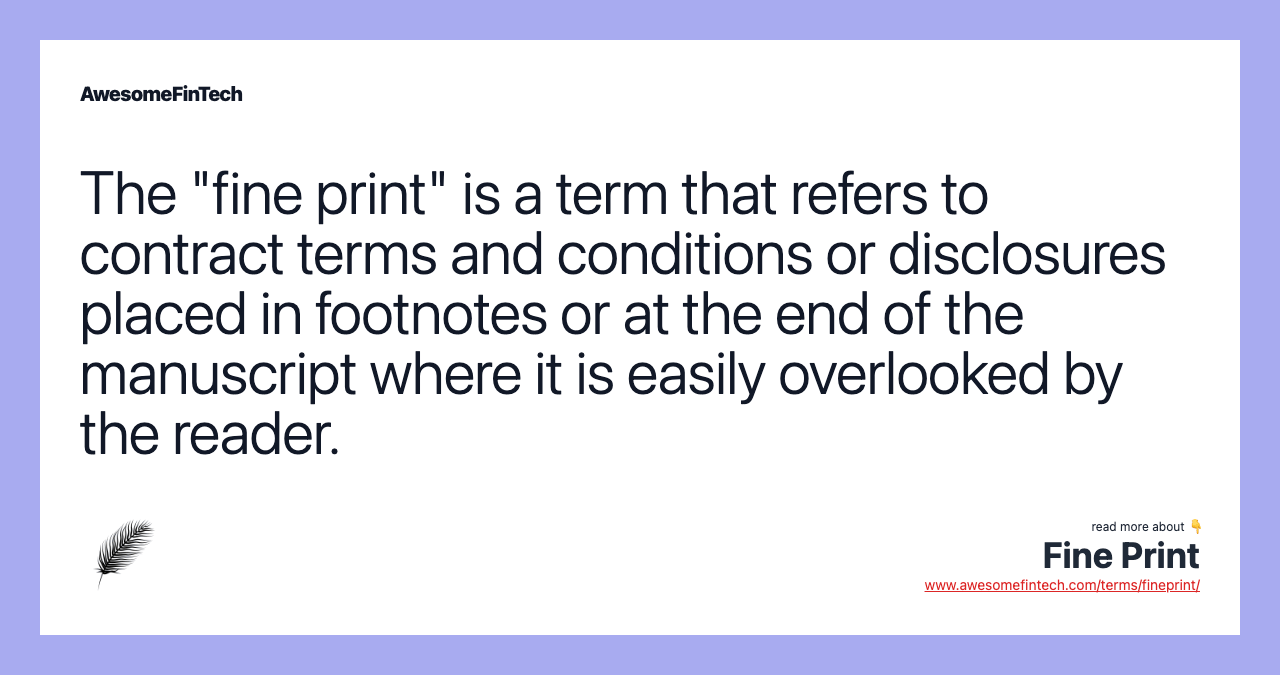
“The fine print” means the smaller, detailed text in a contract, agreement, advertisement, or policy that contains important conditions, restrictions, fees, or exceptions. It is often called “the small print” in British English.
Why It Matters
Fine print may include terms that significantly affect your rights or costs—such as cancellation rules, automatic renewals, hidden fees, liability limits, or eligibility requirements. Because it is usually printed in smaller type or written in technical language, people may overlook it.
For example, a credit-card offer may advertise “0% interest,” while the fine print explains that the rate applies only for a limited period or under specific conditions.
Common Places to Find It
- Contracts and leases
- Insurance policies
- Credit-card agreements
- Subscription terms
- Warranties
- Promotional offers
- Software or app terms of service
What “Read the Fine Print” Means
When someone says, “Read the fine print,” they mean: check the detailed terms before agreeing to something. The phrase is often a warning that the headline offer may not tell the whole story.
Example
“The vacation deal looked cheap, but the fine print said taxes, resort fees, and airport transfers were not included.”
In short, the fine print is the essential detail hiding beneath the attractive headline. Reading it helps you understand exactly what you are agreeing to before you sign, buy, or subscribe.
FAQ
What Does Fine Print Mean? A Simple Guide
What Does “Fine Print” Mean? “Fine print” means small or less noticeable text in a contract, advertisement, or other document. It often explains the details, conditions, or limits behind a promise or offer. For example, an ad might say, “Get a phone for $0 upfront.” The fine print may say that you must pay a monthly service fee or qualify for a specific plan. Those details can change the total cost.
What Is Fine Print? Meaning and Everyday Examples
What Is the Meaning of Fine Print? Fine print means text printed in a small size, especially the detailed terms, restrictions, and conditions in an agreement or offer. For example, an advertisement might promise “50% off,” while the fine print explains that the discount applies only to selected products. These details help readers understand what the offer actually includes. The phrase also has a broader meaning: important details that are easy to overlook, whether or not they appear in small lettering.
What are some famous roulette scandals and controversies throughout history?
What are some famous roulette scandals and controversies throughout history? 1. The Eudaemons – In the 1970s, a group of physics students at the University of California Santa Cruz used a computer to predict the outcomes of roulette games in Nevada casinos. They called themselves “The Eudaemons” and made significant profits before their operation was shut down. 2. The Ritz-Carlton Scandal – In 2004, a team of Eastern European gamblers used a laser scanner and a computer to predict where the ball would land on the roulette wheel at the Ritz-Carlton casino in London.
Do Casinos Print Their Own Cards? Inside Casino-Grade Decks
Do Casinos Print Their Own Cards? The Truth Behind Casino-Grade Playing Cards If you’ve ever shuffled a deck at a Las Vegas table, you’ve probably noticed something different about the cards—they feel smoother, look sharper, and seem almost impossible to bend. The short answer: casinos don’t print their own cards. Instead, they order custom-designed, casino-grade playing cards from specialized manufacturers who engineer them for precision, durability, and security. Why Casinos Use Custom-Engineered Cards Professional casinos in Las Vegas, Macau, and Monte Carlo don’t use standard retail decks.
The Golden Rule of Gambling: Never Bet More Than You Can Afford
Gambling attracts millions of people worldwide, with reports showing that over 1.6 billion people participate in some form of gambling each year. Despite its popularity, the most important principle remains simple: never bet more than you can afford to lose. For example, if a person earns $2,000 a month and spends $50 on a lottery ticket, that amount should be treated like entertainment money, similar to paying for a movie or a meal, not an investment expecting returns.
バイオハザード8の取り返しのつかない要素まとめ
バイオハザード8で取り返しの付かない要素は? 『バイオハザード ヴィレッジ』には、エリアを離れると戻れなくなり、回収できなくなるアイテムや達成記
Casino Rules Explained
What Are the Rules in a Casino? A casino has clear rules that help keep play fair, safe, and smooth for everyone. Most casinos require guests to be at least 21 years old in the United States, and some may ask for a valid photo ID before you enter, cash out, or join certain games. Casinos also expect players to follow the posted rules for each table or machine, because game limits, payout rules, and betting steps can change from one property to another.
Sweepico Casino Guide: Login, Social Casino & Promo Code Info
This site only collects related articles. Viewing the original, please copy and open the following link:What Does Fine Print Mean? Simple Guide